
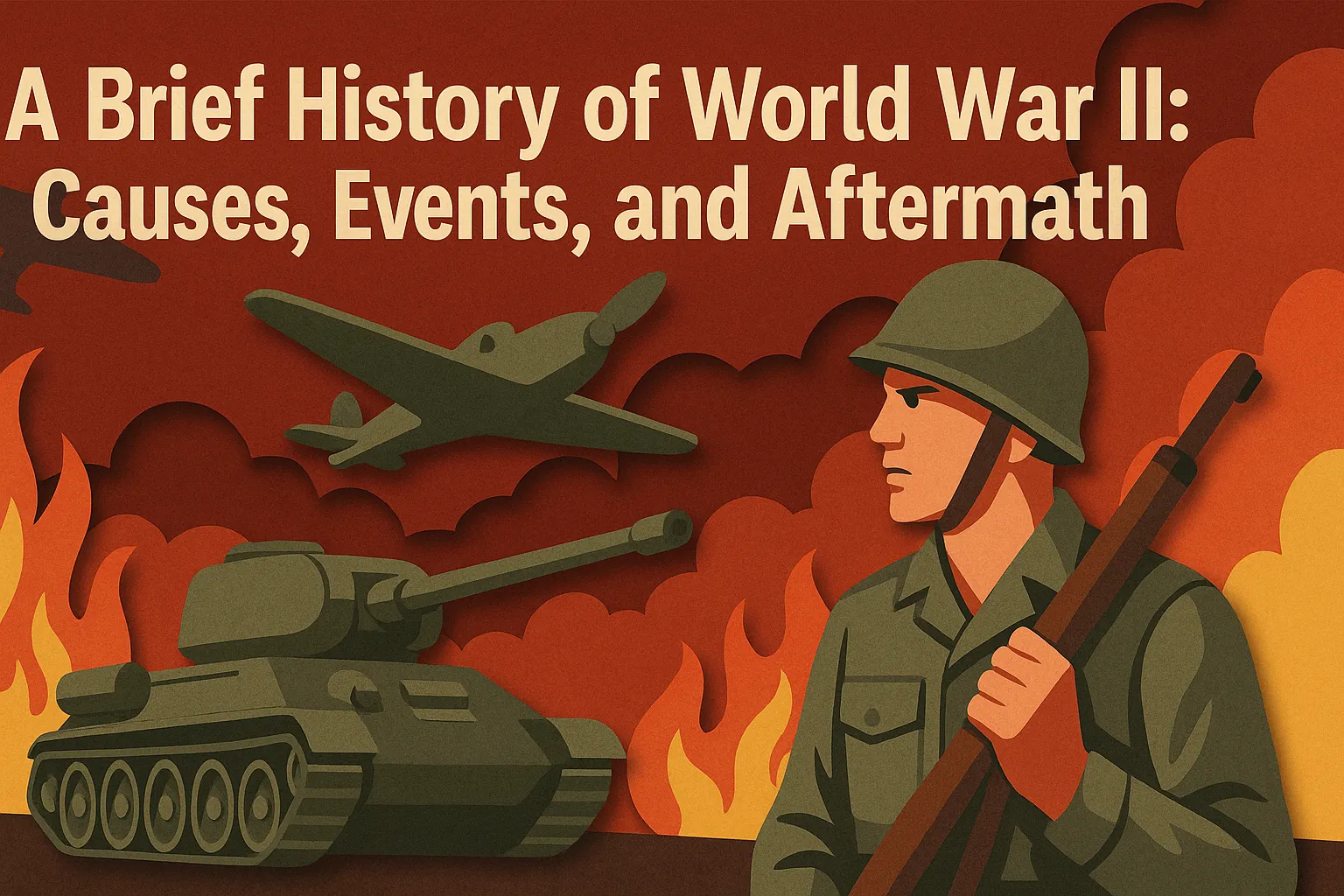
A Brief History of World War II: Causes, Events, and Aftermath
World War II, spanning from 1939 to 1945, remains one of the deadliest and most consequential conflicts in human history. It was a war that involved more than 30 countries and resulted in the deaths of over 70 million people, including civilians and soldiers. But what led to this global catastrophe, and how did it shape the world we live in today?
Causes of World War II:
The roots of World War II can be traced back to the Treaty of Versailles, signed in 1919. The treaty imposed severe reparations on Germany, causing economic hardship and fostering resentment. Adolf Hitler capitalized on this discontent, promising to restore Germany’s former glory and expand its territories.
In the years leading up to the war, Germany began annexing neighboring territories, including Austria and Czechoslovakia. The League of Nations, created to maintain global peace, proved ineffective in curbing Hitler’s aggression. Meanwhile, Japan pursued imperial expansion in Asia, leading to conflicts in China and the Pacific.
Major Events of the War:
The war officially began on September 1, 1939, when Germany invaded Poland, prompting Britain and France to declare war. Key events included:
-
1941: The United States entered the war after the Japanese attack on Pearl Harbor.
-
1942-1943: The Allies gained momentum with victories in North Africa and the Pacific.
-
1944: D-Day marked the Allied invasion of Normandy, a turning point in the European theater.
-
1945: Germany surrendered in May, and the US dropped atomic bombs on Hiroshima and Nagasaki in August, leading to Japan’s surrender.
Aftermath and Consequences:
World War II fundamentally altered the global order. The United States and the Soviet Union emerged as superpowers, setting the stage for the Cold War. The United Nations was established to prevent future conflicts, and the Nuremberg Trials held Nazi leaders accountable for war crimes.
The war also led to significant social changes, including the rise of decolonization movements in Asia and Africa and the emergence of the US as a global economic leader. However, the scars of the war lingered, particularly in Europe and Japan, where cities lay in ruins and economies were in shambles.
World War II serves as a powerful reminder of the devastating consequences of unchecked aggression, nationalism, and authoritarianism. Its lessons continue to resonate today as nations strive to prevent another global conflict.
Created At: 13/05-2025 05:57